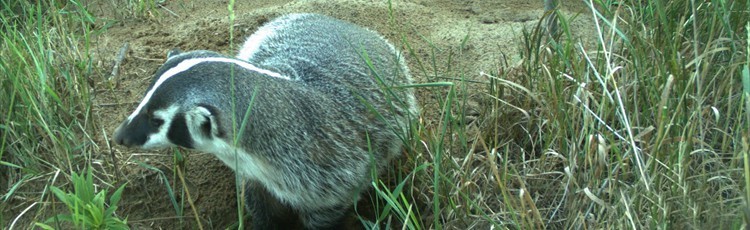
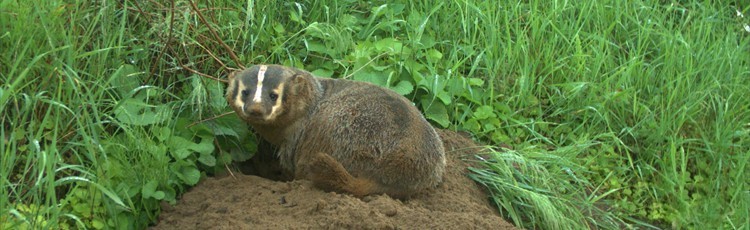
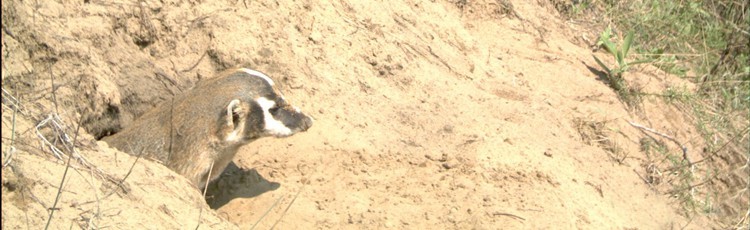
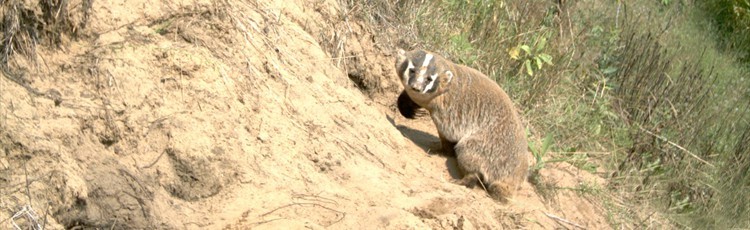
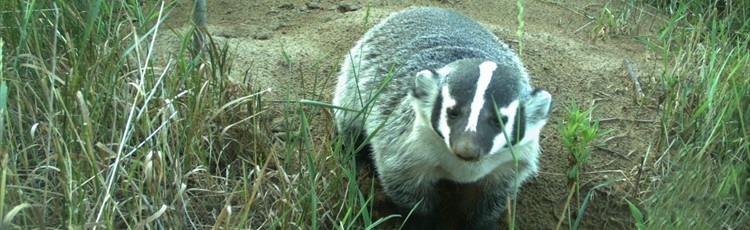
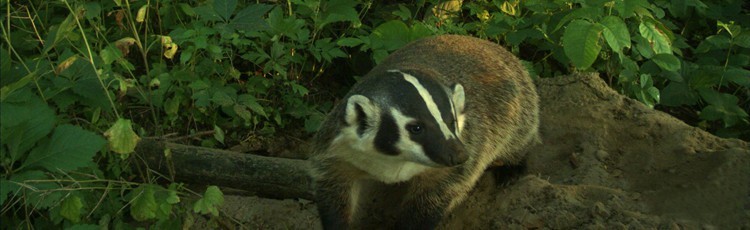
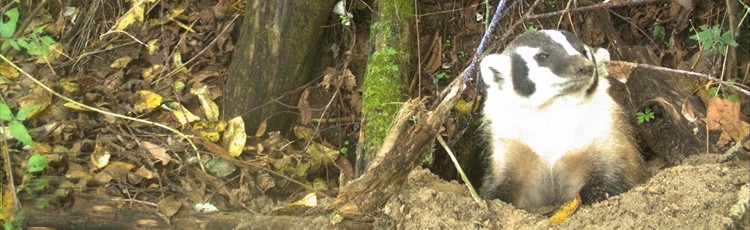
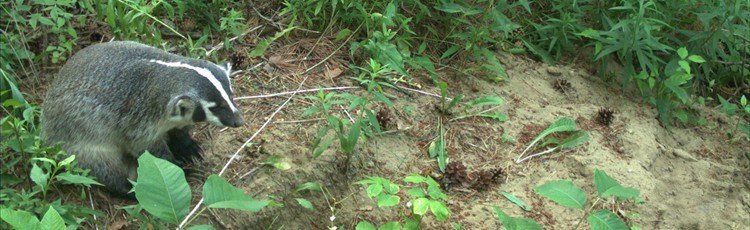
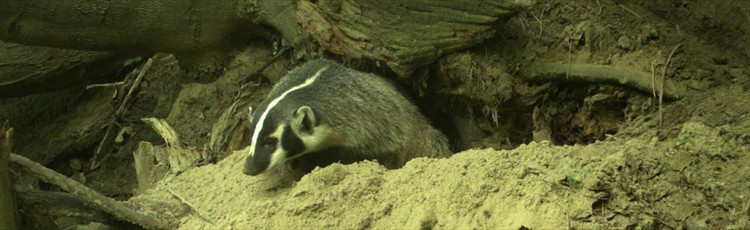
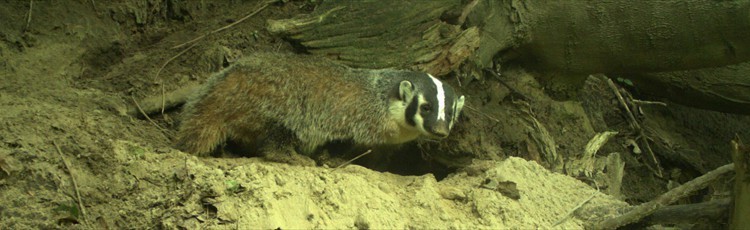
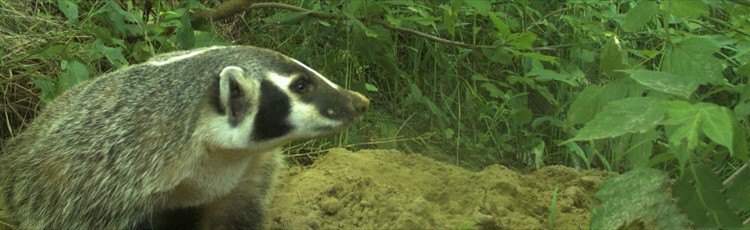
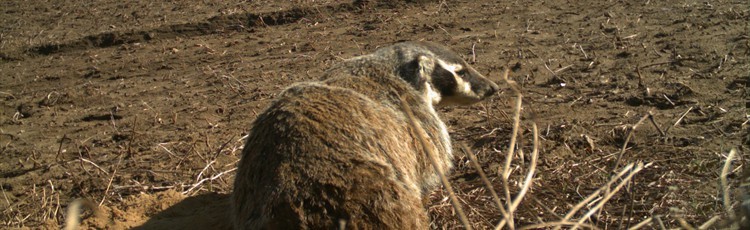
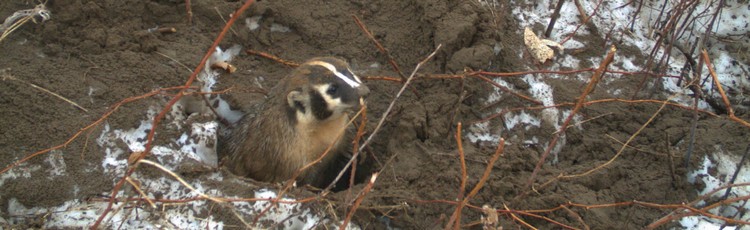
Why Study badgers?
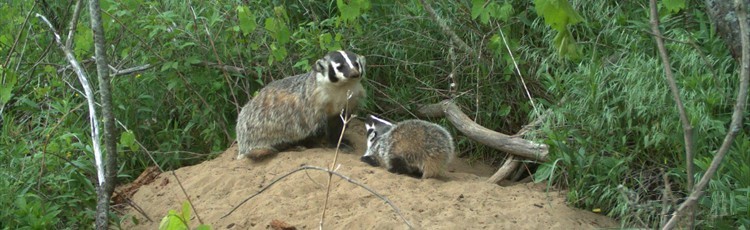
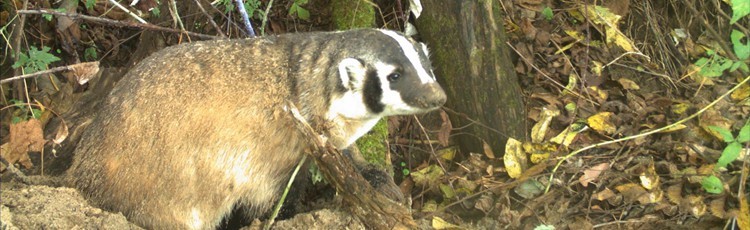
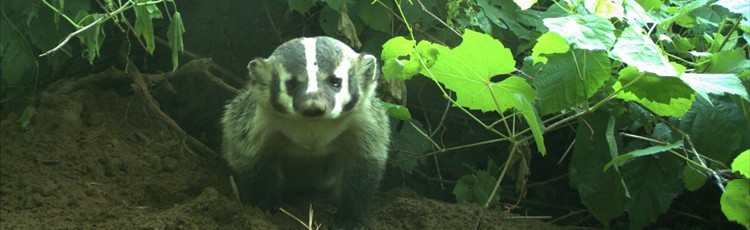
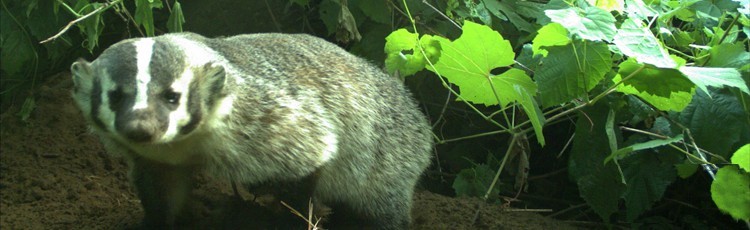
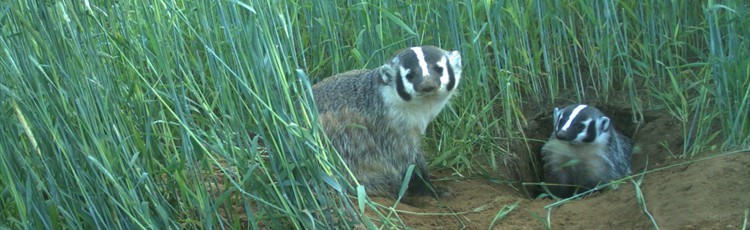
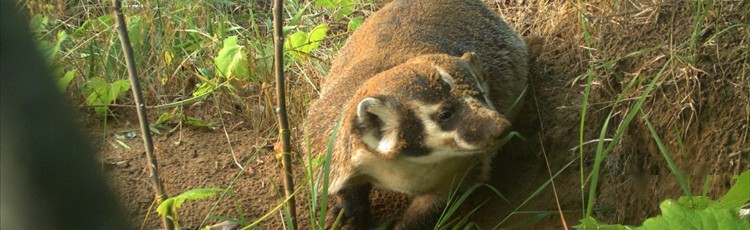
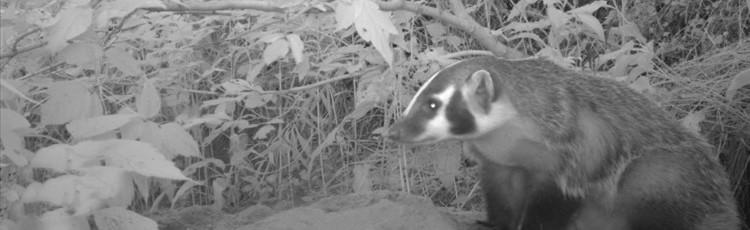
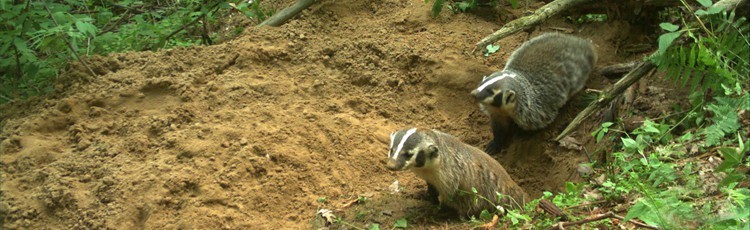
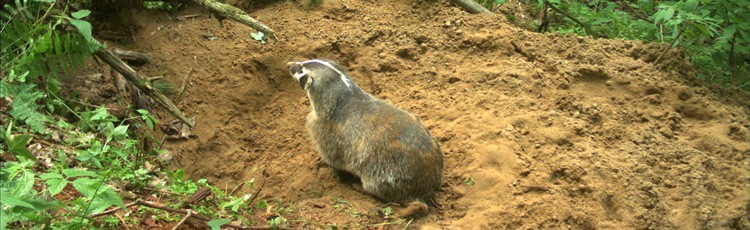
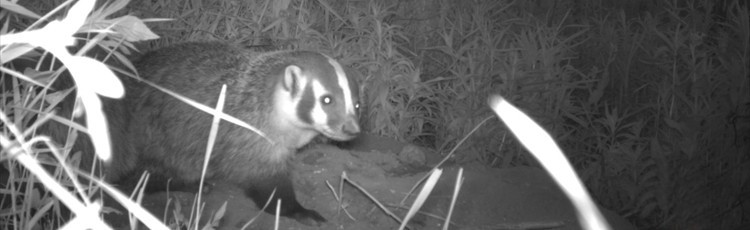
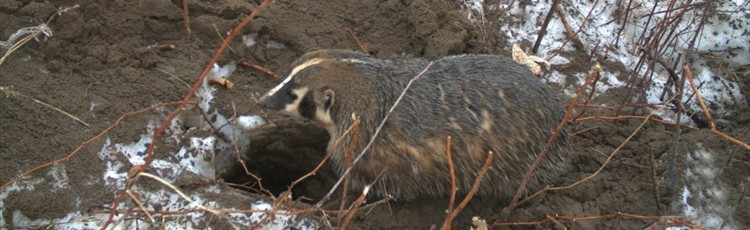
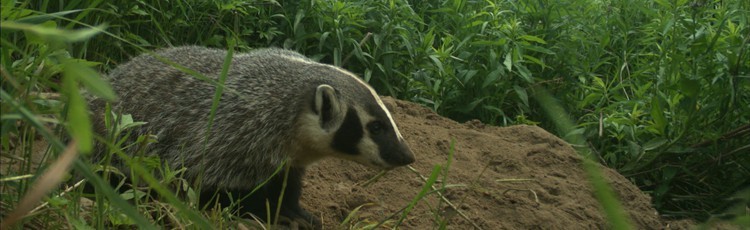
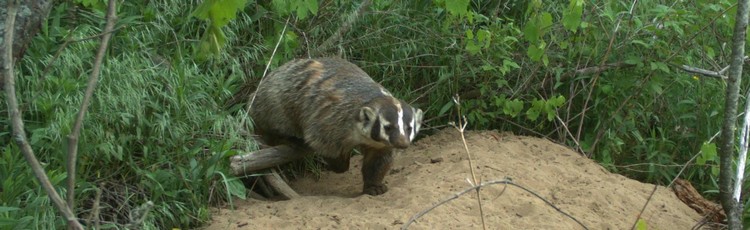
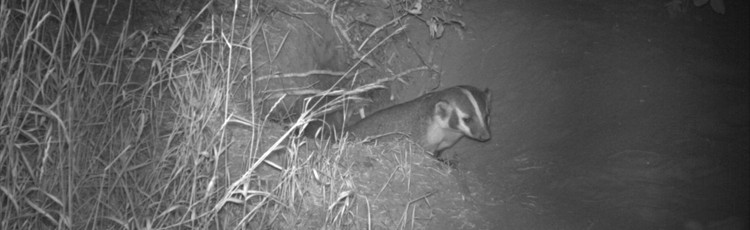
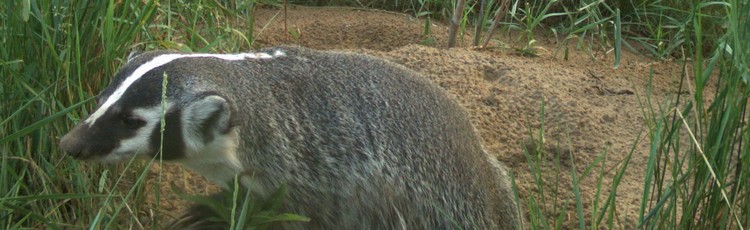
Very little is known about badgers in Ontario. All we really know is that there are so few here that they are listed as endangered both provincially and nationally. In fact, they are so uncommon that people living in the heart of badger country are often surprised to hear that they share their lands with this extraordinary species! Because of this, there are many aspects of their basic ecology that we simply do not understand. This has a large impact on conservation. For instance, how can we ensure that there is enough habitat for badgers in Ontario if we don't really even know what sort of habitat they require?
Learning more about badger ecology, and filling these "knowledge gaps" is obviously the best place to start with conservation, but it isn't the whole picture. Southern Ontario is an agricultural landscape and farming is deeply knit into our economic and cultural fabric. Not only that, but badgers themselves are dependent in many ways on agriculture for their survival in the province. Because of this, it is very important that we not just understand badgers, but understand how they fit into the agricultural landscape.
Radio-tracking badgers
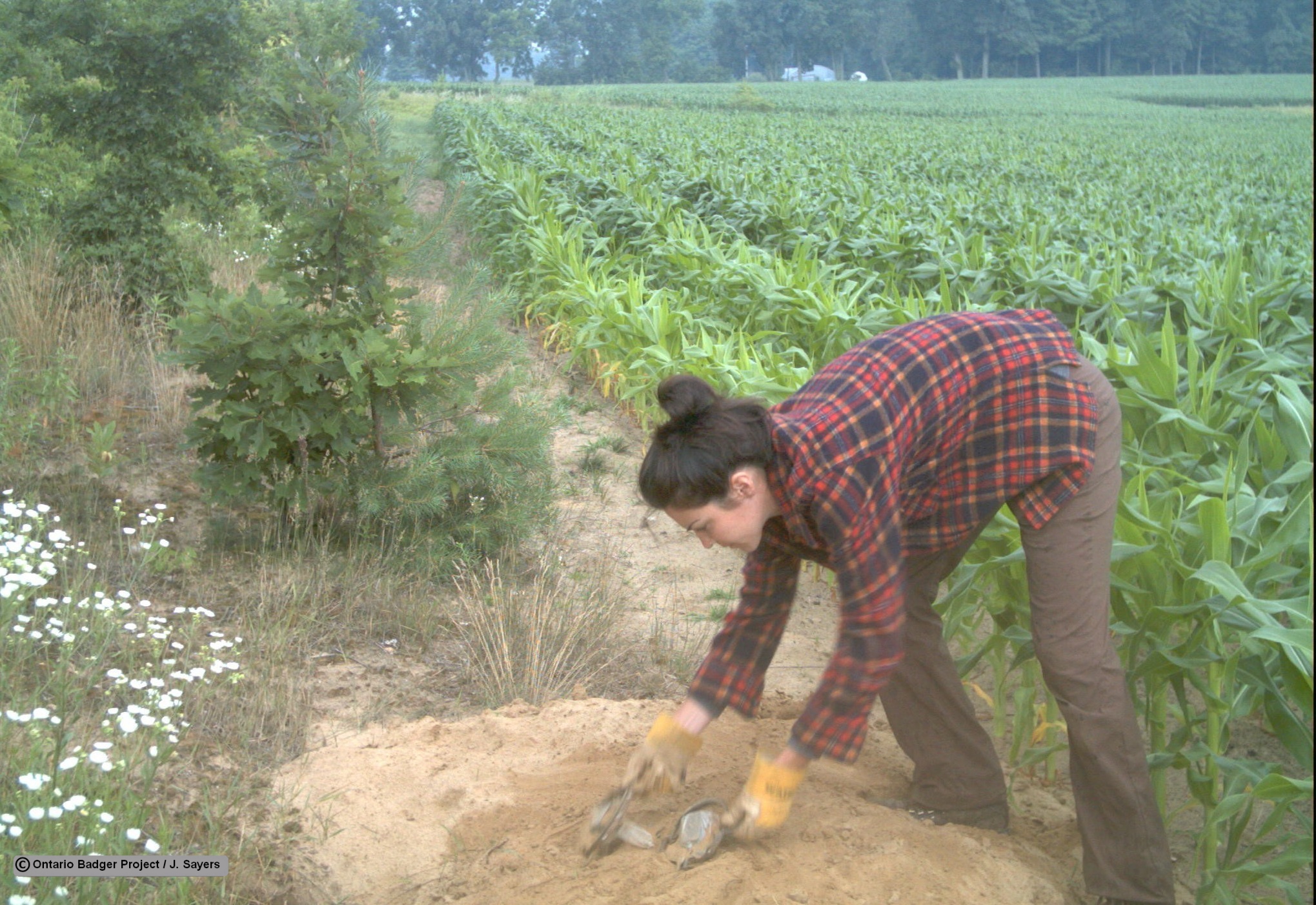
Traps are placed at the entrance of a known burrow
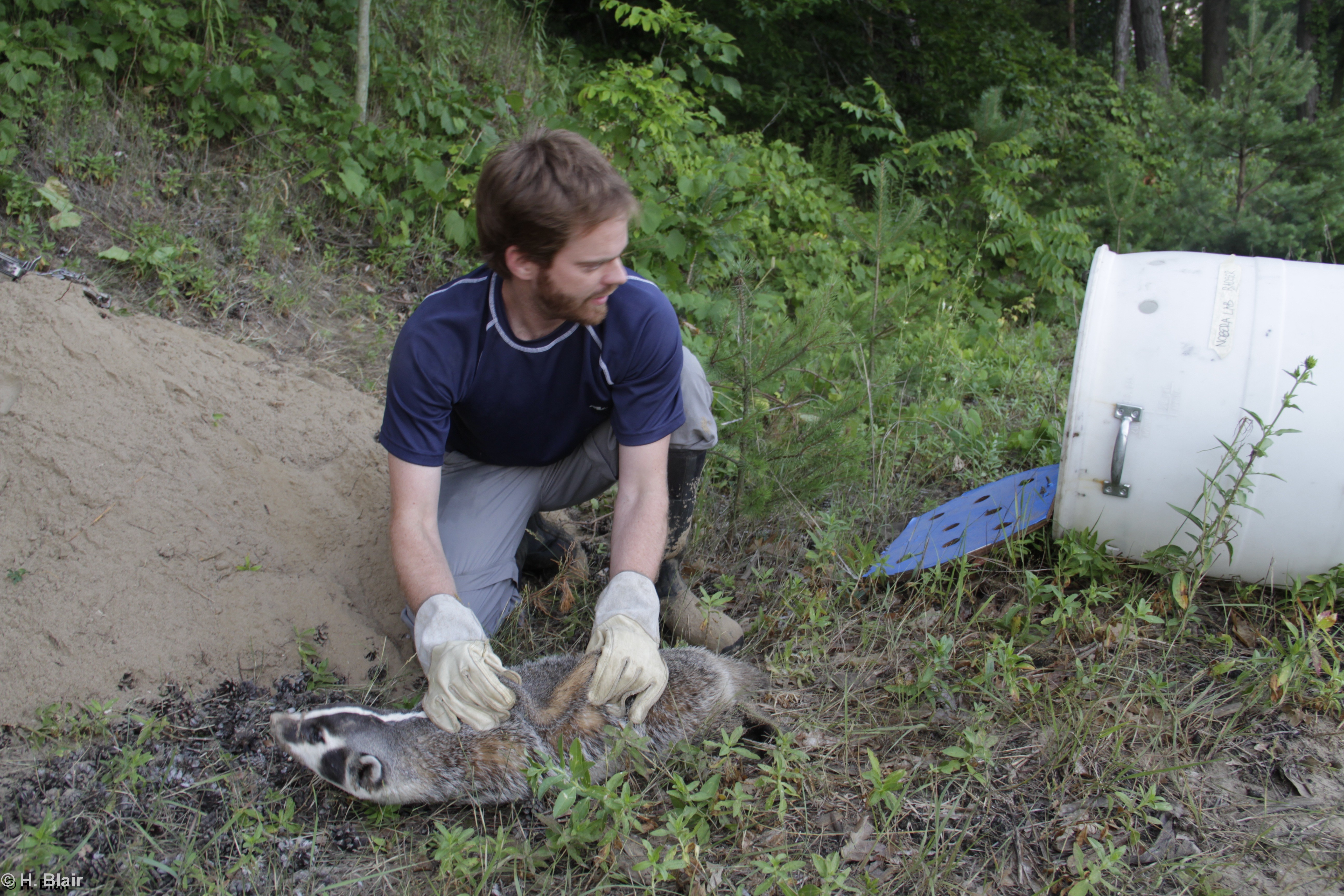
Removing a badger from the live-trap to place him into the transport barrel
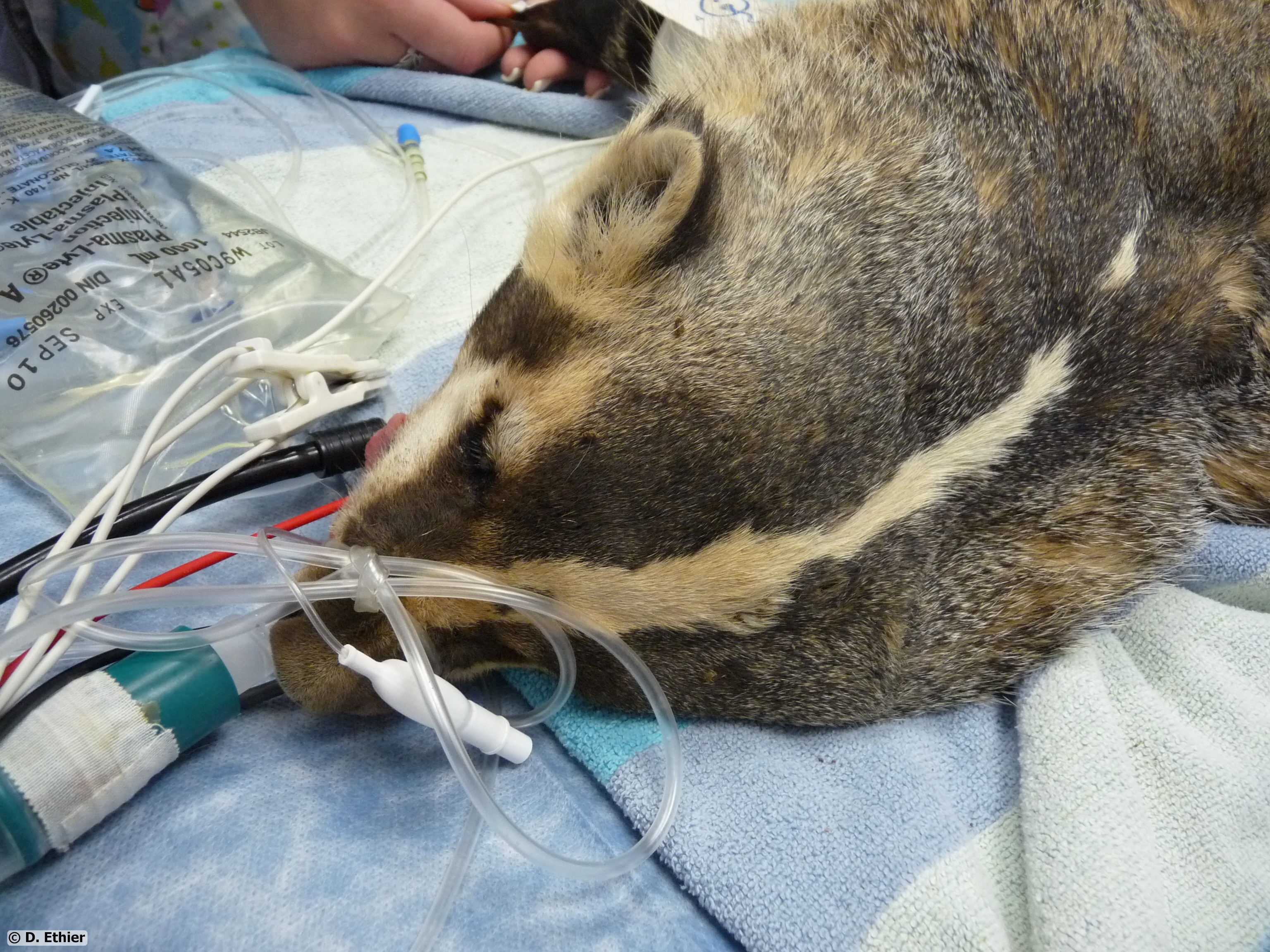
Ontario's first radio-tracked badger, Lindsay, at the Big Creek Veterinary Clinic in Delhi
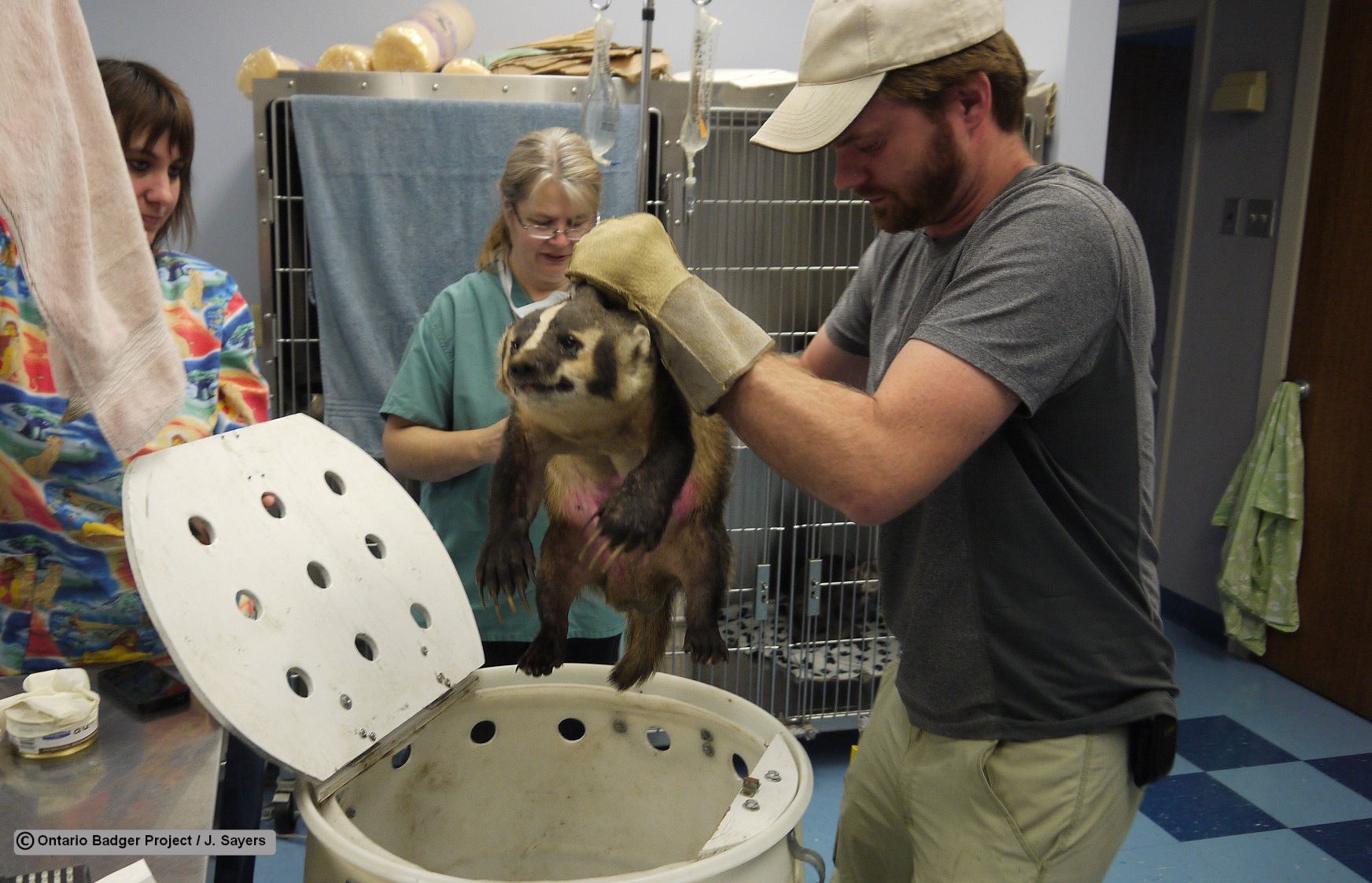
Once the procedure is complete, we bring the badger back to the burrow where it was trapped
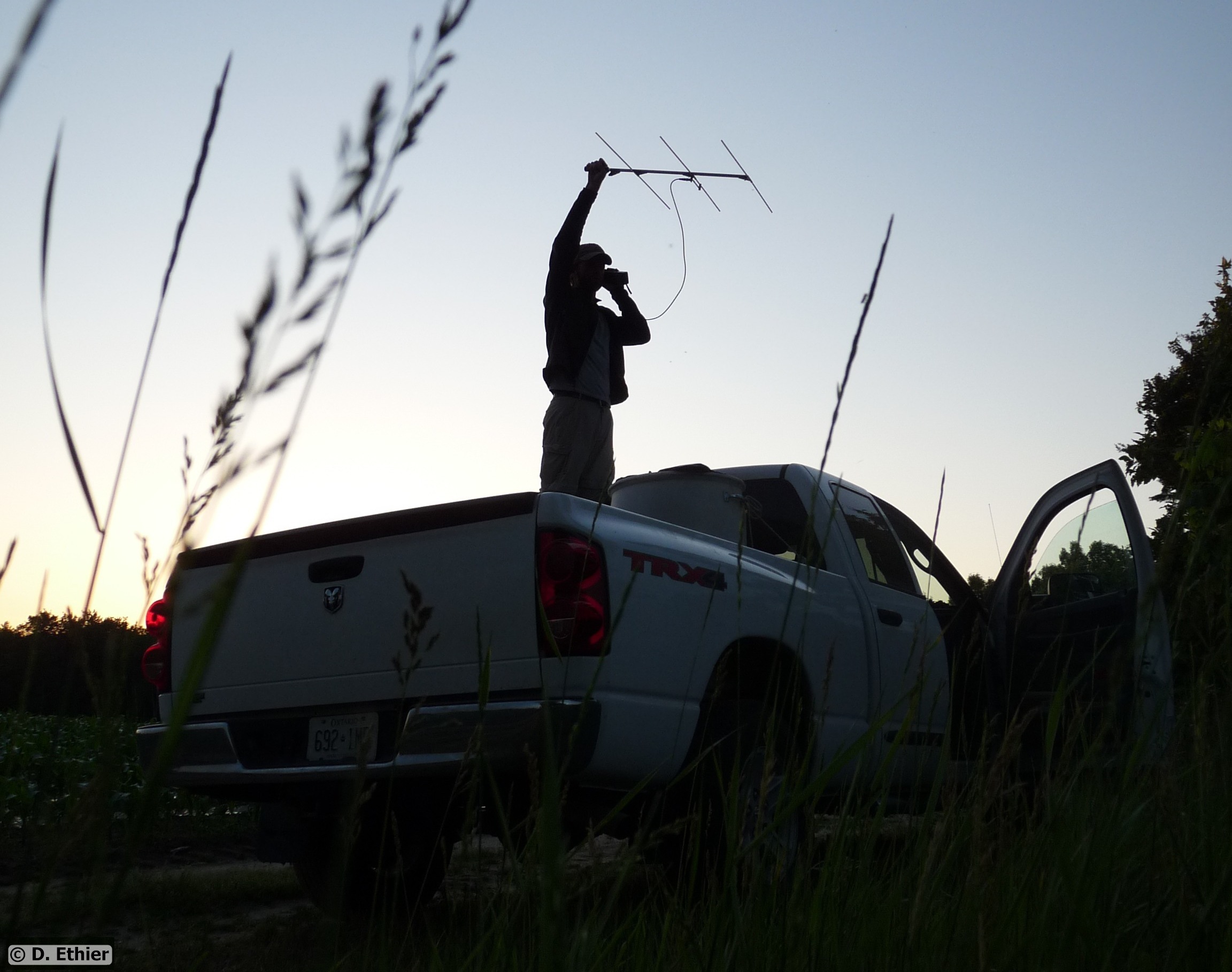
A hand-held antenna is used to listen for the "beep" and determine the direction of the badger
One of the more traditional, "tested and true" methods of studying animals is to live-trap several individuals and outfit them with radio-transmitters, so that biologists can get real-time information on their movement, behaviour and habitat use.
We use "soft-catch" leg-hold traps placed at the entrance of a burrow. These are similar to what fur trappers use, but they have rubber padding so they don't cause any injuries to the animal. Badgers occur in such low densities relative to other animals, that trying to use bait to trap them would only result in trapping several hundred raccoons and skunks (a slight exaggeration!). By focusing only on the entrance of burrows, we have a much greater chance of actually catching a badger. And by using a soft-catch leg hold trap instead of a cage trap we significantly reduce the risk of injuries to the badger. Surprisingly, despite the badger's reputation for protecting itself fiercely, they are remarkably docile in the leg-hold traps!
Traditional radio-tracking involves specially designed collars. However, badgers don't really have necks, and harnesses can be a great encumbrance to an animal that spends so much time going in and out of burrows. Following the experience of the researchers in BC, we use a specially designed radio-transmitting implant instead. These are implanted by professional vets in a sterile environment. Once the procedure is finished, the badger can go about its business as normal with no adverse effects.
After the badger is released, the real fun for us begins. The transmitter sends out a steady series of "beeps" that our hand-held antenna can pick up. Following the direction where these beeps are the loudest, we can follow the badger as it settles back into its normal routine and discover much about the life of a badger that wouldn't have been possible before.
DNA from Hair
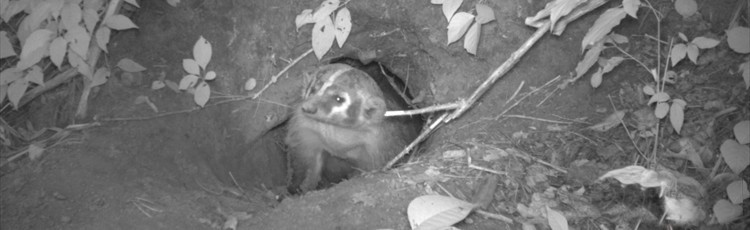
DNA from hair is an incredible tool for researching secretive animals like badgers. Often, when we investigate a fairly recent burrow, we can find hair in or around the entrance with just a few minutes of searching. We can also set up "hair-snags" to collect hair samples of animals using the burrow while we are away. The amount of information we can get from hair, and the fact that it is non-invasive and very easy to collect is why reports of burrows are so important for our research, especially if we receive them promptly and can get out on site quickly.
Once hair is collected, the DNA is extracted and amplified in the lab. First we need to determine if the hair came from a badger, then we can identify the individual badger that left the hair. The DNA signature is like a fingerprint that is unique to an individual. With enough samples collected we can begin to answer questions like: how related badgers in Ontario are to each other; how related they are to neighbouring populations in Michigan; how serious a threat inbreeding is to the conservation of the species in Ontario. We can also use DNA samples from hair to learn more about population size, territory size, and even the distance and time of movements by badgers, all by recording when and where individual badger DNA was collected.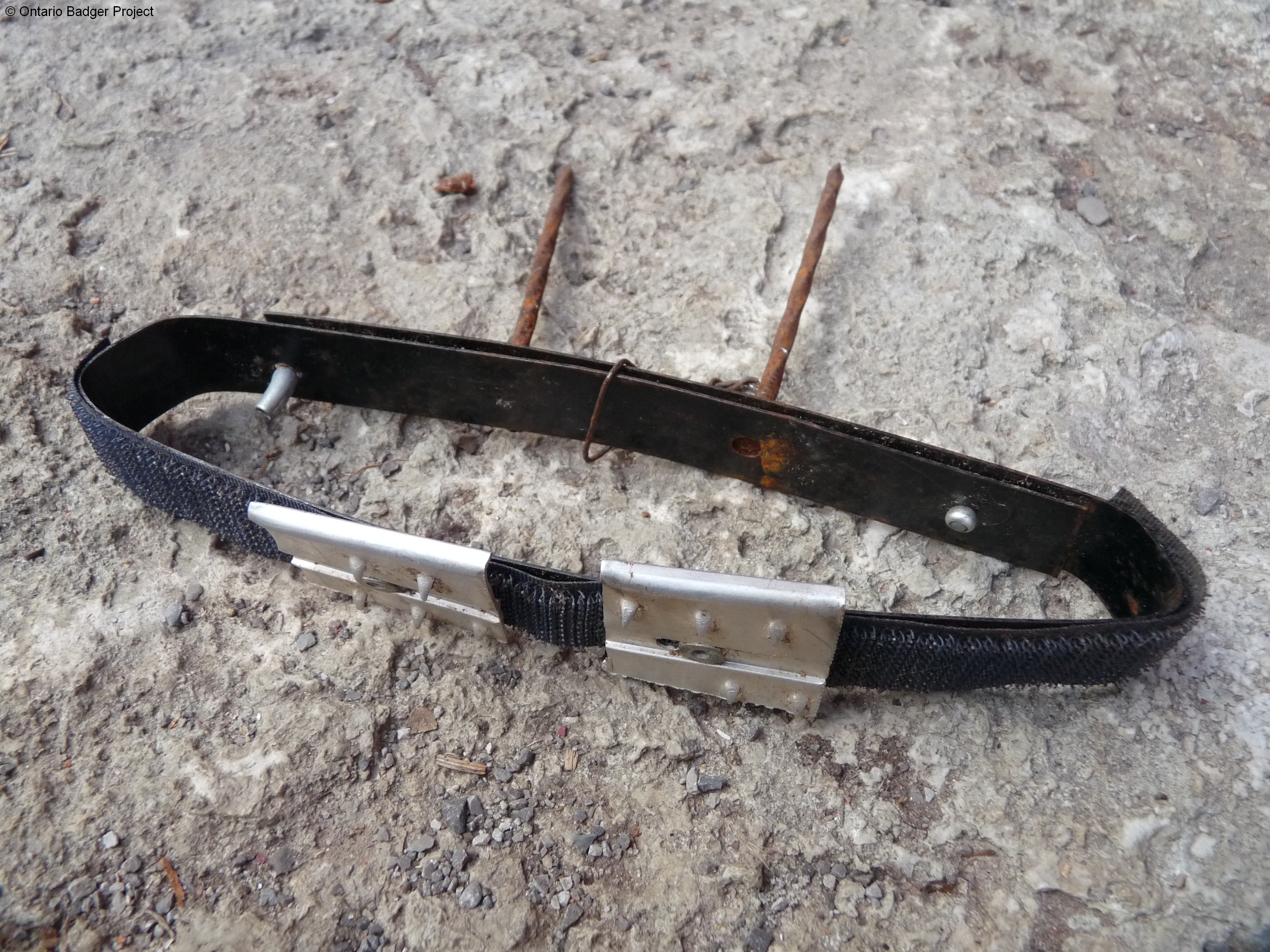
The nails of this "hair-snag" secure it into the top ceiling of a burrow, and the Velcro and carpet tack strip are what actually snags the hair
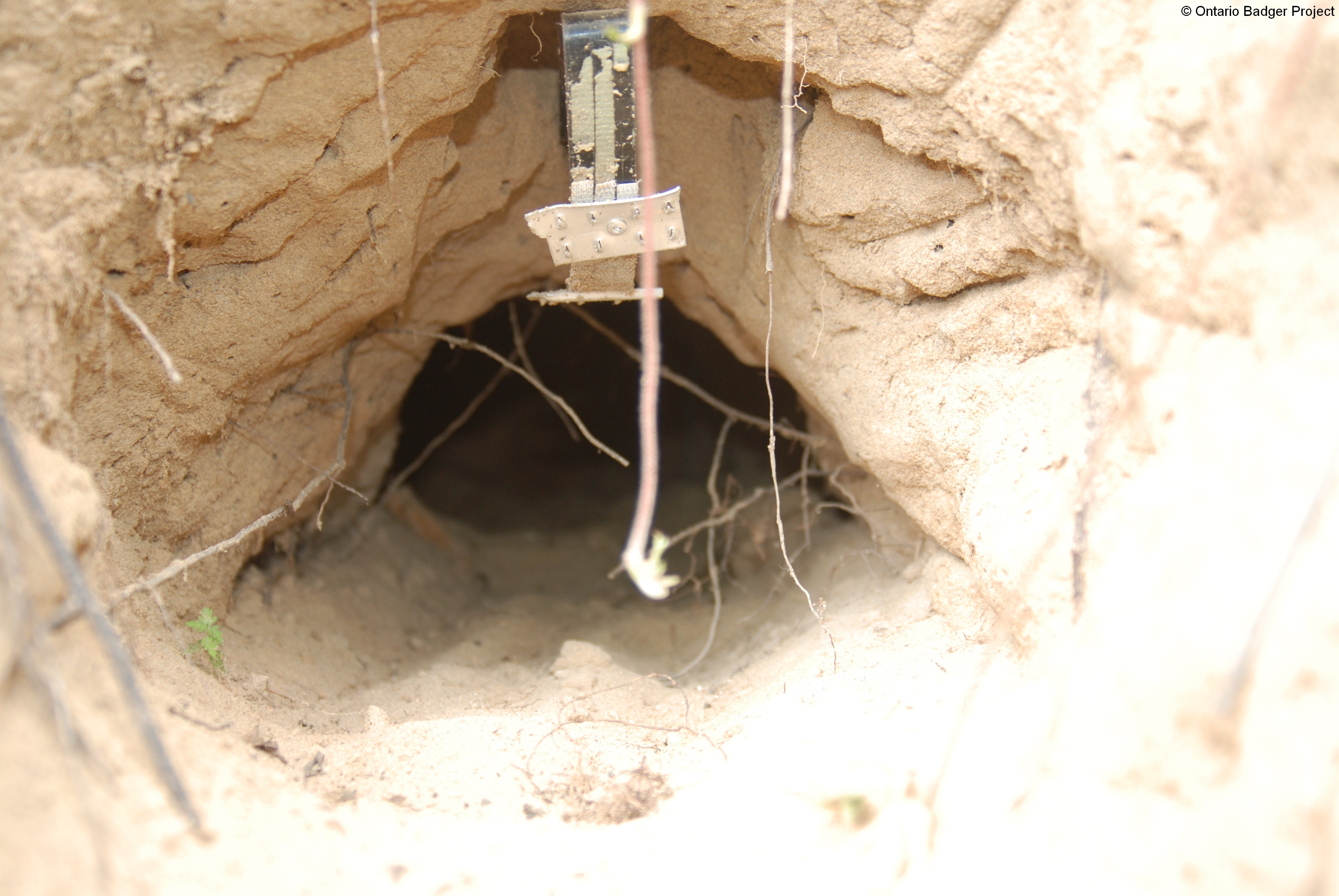
A hair-snag placed in the top of a burrow will collect a hair sample of any animal that enters or exits
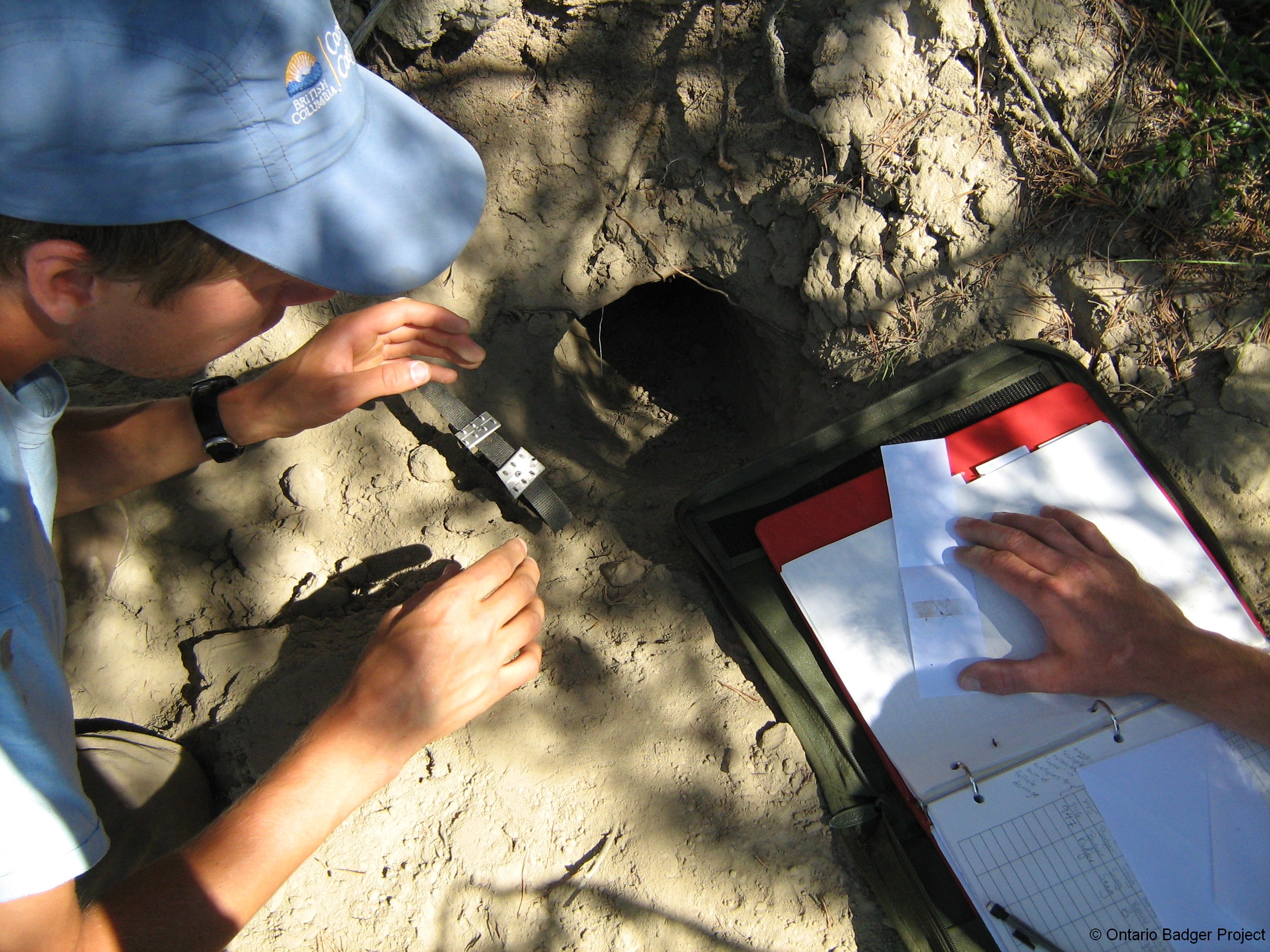
Biologists in BC removing hair from a hair-snag in a badger burrow
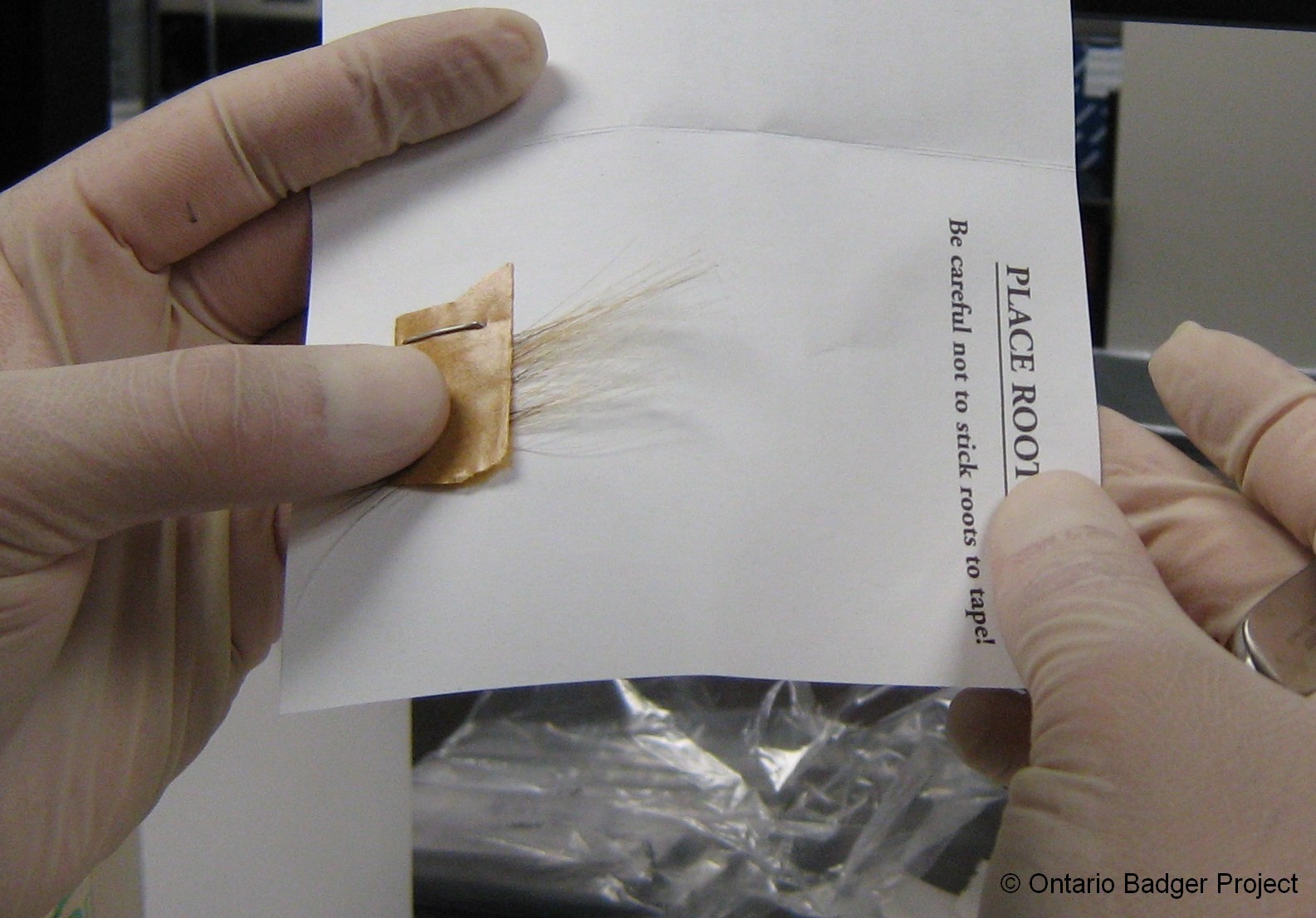
Hairs that are collected are taken back to the lab and DNA is extracted from them for analysis